
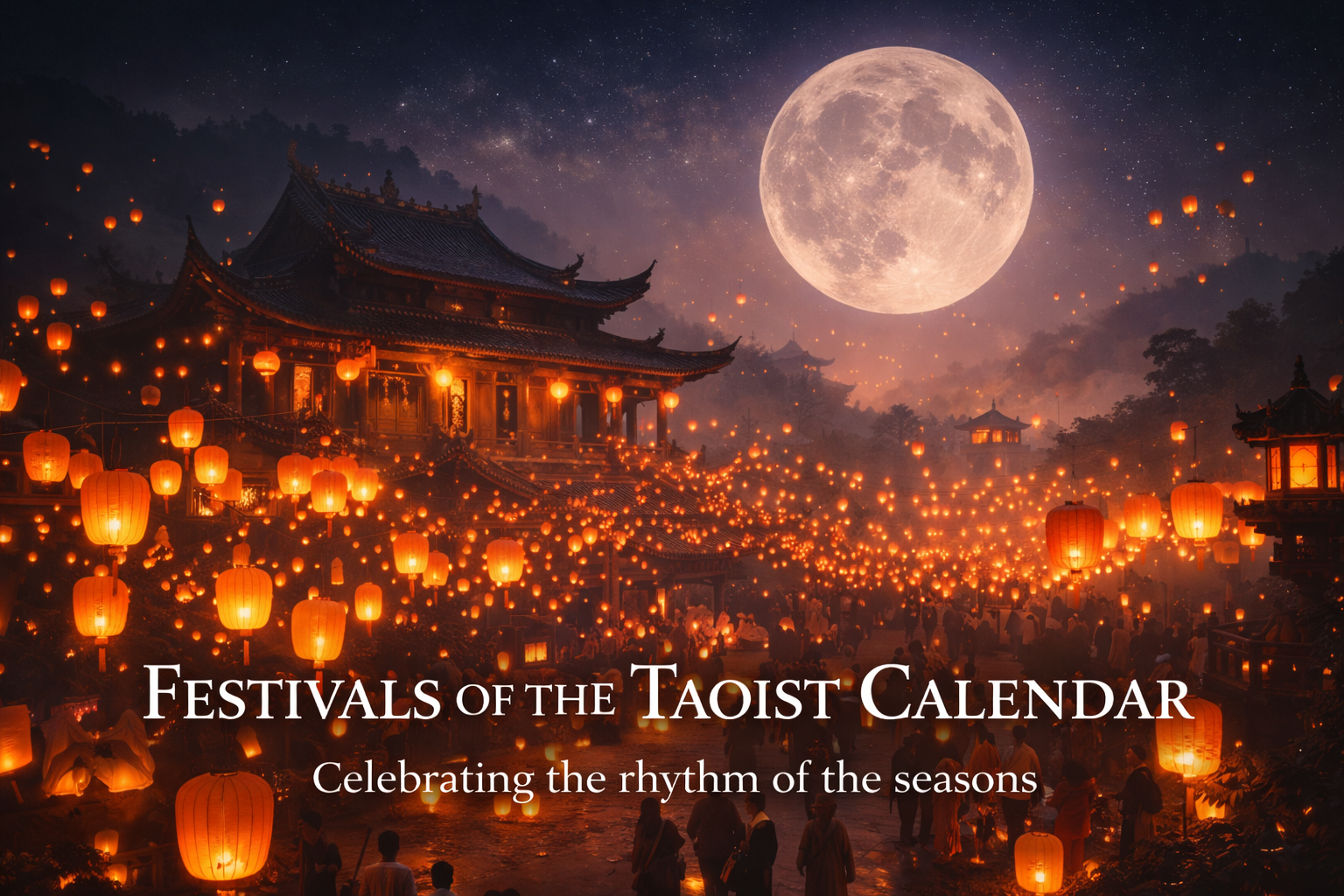
Festivals of the Taoist Calendar
Celebrating the Rhythm of Heaven and Earth
Festivals hold a special place in Taoist culture, marking important moments in the natural cycle of the year. Guided by the lunar calendar, these celebrations reflect the Taoist understanding that human life is deeply connected to the rhythms of heaven, earth, and the changing seasons.
Across centuries, temples and communities have gathered to celebrate these seasonal turning points through ritual, music, food, and symbolic offerings. Lanterns illuminate temple courtyards, incense rises toward the heavens, and families share meals prepared for the occasion. These traditions transform philosophical ideas about harmony and balance into living cultural experiences.
More than simple celebrations, Taoist festivals remind communities that life moves in cycles — renewal follows winter, abundance follows growth, and remembrance connects the past with the present.
Lantern Festival – Light and Renewal
Celebrated at the close of the Lunar New Year period, the Lantern Festival marks the first full moon of the new year. Temples and city streets glow with thousands of lanterns representing guidance, hope, and illumination.
In Taoist symbolism, light represents clarity and spiritual insight. Lanterns therefore symbolize the ability to move forward with wisdom and harmony. Families gather to admire lantern displays, solve riddles written on lanterns, and share traditional foods beneath the glowing night sky.
Dragon Boat Festival – Strength and Protection
The Dragon Boat Festival takes place in early summer and celebrates both cultural tradition and the protective symbolism of the dragon. Dragon boats race across rivers in energetic competitions that draw entire communities together.
Alongside the races, herbal traditions are often practiced during this time of year. Aromatic plants such as mugwort and calamus are traditionally hung near doorways to promote health and ward away harmful influences during the warmer months.
Ghost Festival – Honoring the Spirit World
One of the most spiritually significant observances in Taoist tradition is the Ghost Festival. During this time, families prepare offerings of food, incense, and symbolic gifts to honor ancestors and wandering spirits.
Lanterns are sometimes released on rivers or placed along temple paths to guide spirits safely through the world of the living. The festival reflects a deep cultural belief that the relationship between the living and the spirit world must remain balanced through remembrance and respect.
Mid-Autumn Festival – Harmony and Gratitude
Celebrated under the bright full moon of early autumn, the Mid-Autumn Festival is a time of reflection and gratitude. Families gather to appreciate the harvest season and share traditional foods beneath the moonlight.
The round moon symbolizes unity, completeness, and balance — qualities central to Taoist philosophy. Lanterns, music, and storytelling create a peaceful atmosphere that emphasizes harmony between family, nature, and the changing seasons.
Festivals as Living Tradition
Though these festivals have ancient roots, they remain vibrant expressions of culture today. From temple rituals and community celebrations to food traditions and lantern displays, Taoist festivals continue to bring people together in celebration of life’s natural cycles.
Through these traditions, philosophy becomes something that is not only studied but lived — experienced through light, movement, memory, and shared celebration.
Many artistic traditions in Taoist culture — including music, calligraphy, ceremonial dance, and martial arts — developed alongside temple festivals and ritual practice. These cultural expressions continue to preserve the philosophy and symbolism of Taoist life.