
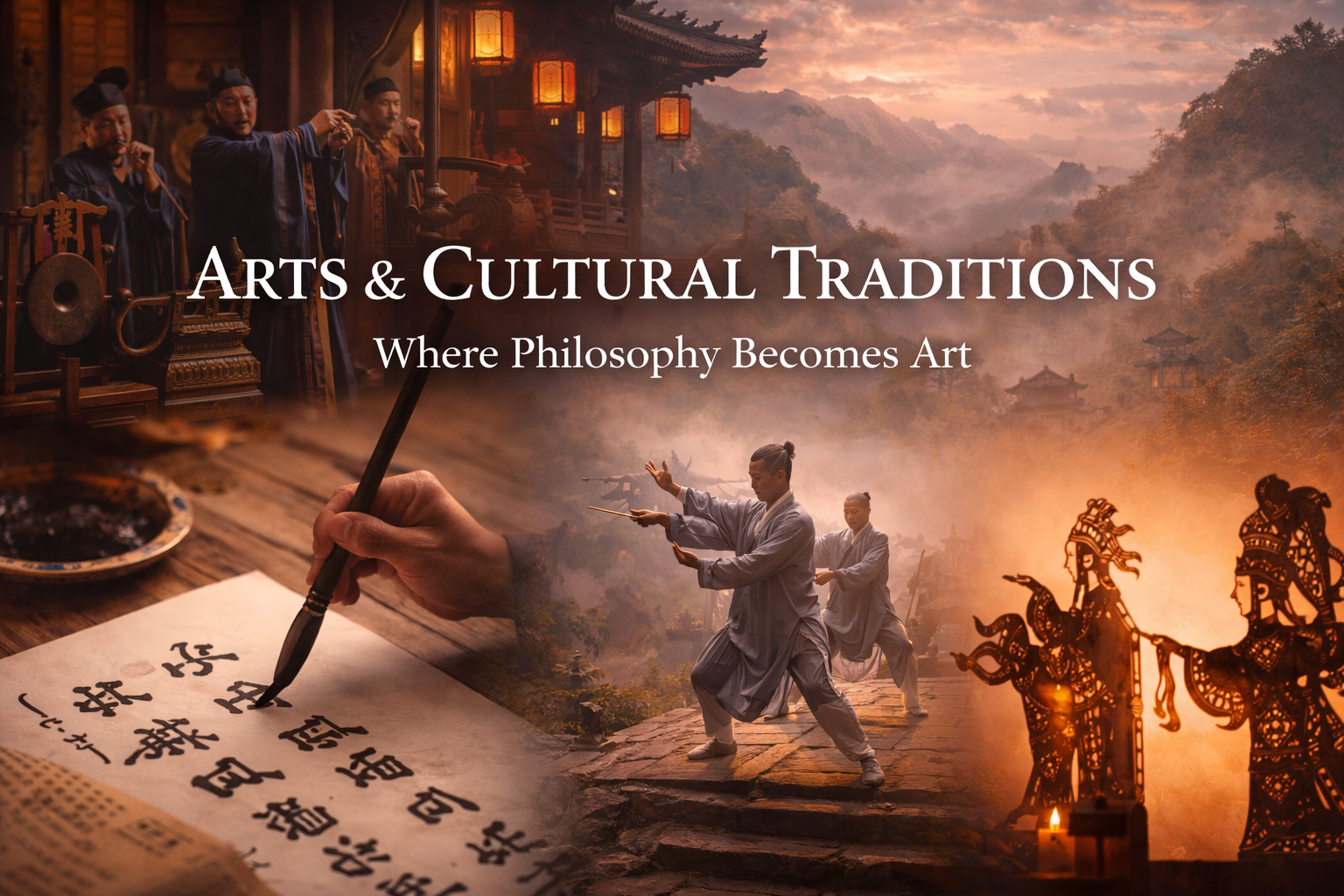
Arts & Cultural Traditions
Where Philosophy Becomes Art
Throughout history, Taoist philosophy has influenced many forms of artistic and cultural expression. These traditions reflect the Taoist belief that harmony, balance, and natural flow can be expressed not only through words but also through movement, sound, and visual form.
From the graceful motion of Tai Chi to the quiet discipline of calligraphy, Taoist arts encourage patience, awareness, and a deep connection to the rhythms of nature.
Many of these practices developed within temple communities and cultural festivals, where ritual, storytelling, and artistic expression blended together to preserve philosophical ideas across generations.
Calligraphy and the Art of the Brush
Calligraphy holds a special place in Chinese culture and Taoist tradition. The act of writing characters with brush and ink is considered both an artistic practice and a form of meditation.
Each stroke reflects balance, breath, and intention. The movement of the brush mirrors the Taoist idea of natural flow — fluid, responsive, and harmonious.
Ancient Taoist texts, poetry, and philosophical writings were often preserved through this art form, allowing calligraphy to become a bridge between literature, philosophy, and visual beauty.
Martial Arts and Internal Cultivation
Many well-known martial arts traditions are deeply connected to Taoist philosophy. Practices such as Tai Chi and Qigong emphasize slow, deliberate movement and controlled breathing to cultivate internal energy and balance.
These disciplines were often practiced in mountain temples, where monks studied movement as a way of harmonizing body and mind.
Rather than focusing only on strength, Taoist martial arts emphasize softness, adaptability, and awareness — reflecting the Taoist principle that flexibility and balance overcome force.
Temple Music and Ritual Performance
Music has long accompanied Taoist ritual ceremonies. Bells, gongs, flutes, and chanting voices create layered rhythms that guide meditation and sacred observances.
The sound of temple music is believed to harmonize the surrounding environment and help participants enter a state of reflection. During festivals and ceremonies, music also marks important moments within ritual performance.
Storytelling, Opera, and Puppetry
Traditional storytelling arts such as Chinese opera and shadow puppetry have also preserved many Taoist legends and philosophical themes.
Through colorful costumes, symbolic gestures, and dramatic storytelling, these performances bring ancient myths, heroic tales, and spiritual teachings to life.
For centuries, such performances were a common part of temple festivals and public celebrations, allowing philosophical ideas to be shared with entire communities.
Living Cultural Heritage
Today these artistic traditions continue to thrive around the world. From martial arts schools and calligraphy studios to temple festivals and cultural performances, Taoist arts remain a vibrant expression of philosophy in everyday life.
Through movement, music, and visual art, Taoist culture continues to remind us that harmony is not only an idea — it is something that can be practiced and experienced.