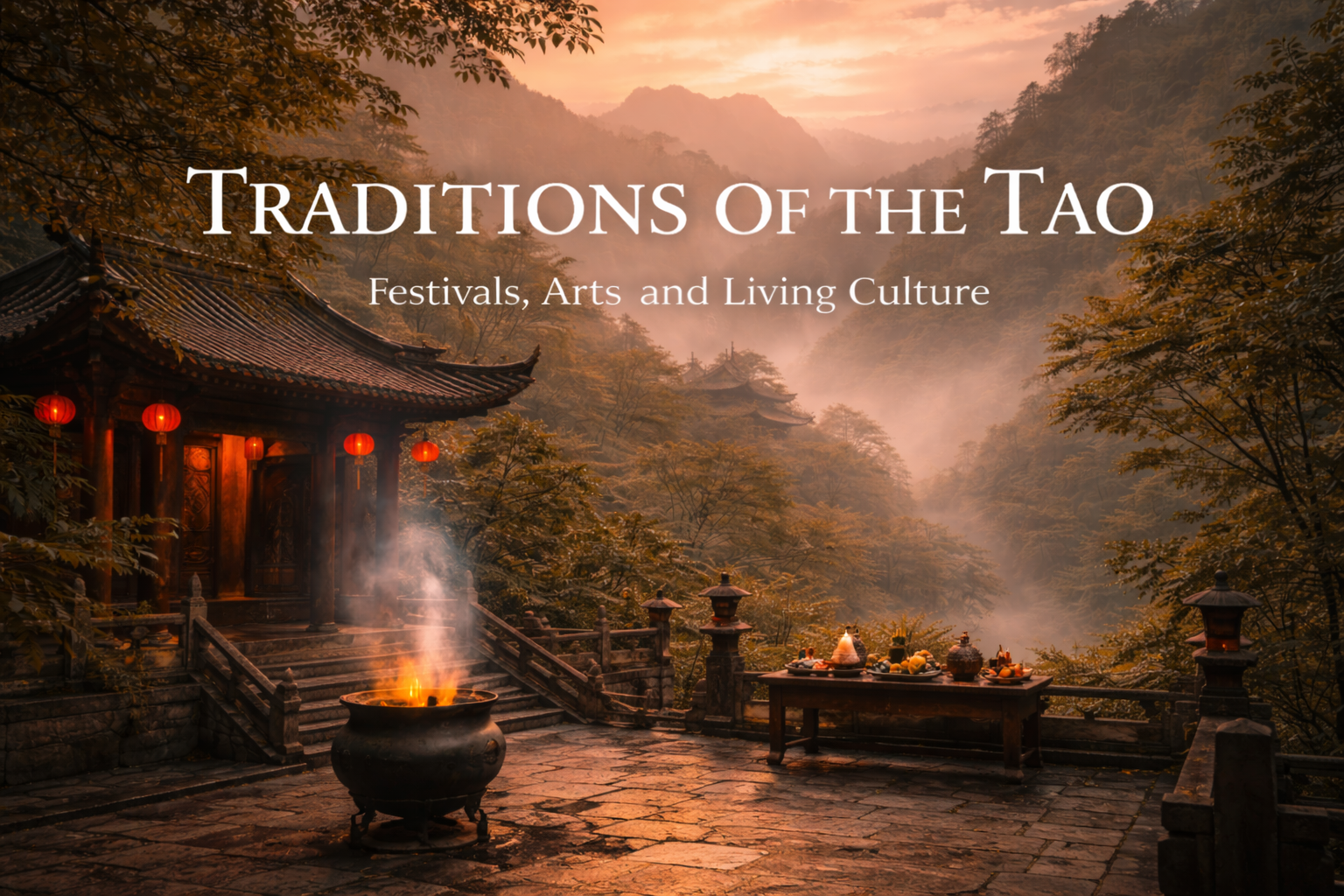
Sacred Spaces of Taoist Practice
For more than two thousand years, Taoist temples have served as sacred places where philosophy, ritual, and daily life come together. Often built in mountain valleys, forested hillsides, or quiet corners of ancient cities, these temples are designed to exist in harmony with the natural landscape. Flowing water, stone pathways, and curved rooftops mirror the balance and movement found throughout the natural world.
Visitors entering a Taoist temple are often greeted by the gentle fragrance of incense and the quiet sound of bells or wind chimes moving in the air. Lanterns glow beneath wooden beams, and incense smoke rises slowly from bronze burners placed before the temple altar. These sensory details create an atmosphere meant to quiet the mind and encourage reflection.
Temples are more than places of worship — they are centers of community life, learning, and spiritual cultivation. Taoist priests perform ceremonies, recite sacred texts, and guide rituals intended to restore harmony between heaven, earth, and humanity.
The Role of Ritual
Ritual plays an important role in Taoist temple life. These ceremonies are performed to bless communities, honor deities, mark seasonal transitions, and maintain balance between the visible and invisible worlds.
During formal rituals, Taoist priests wear traditional robes symbolizing cosmic harmony. Sacred music, chanting, bells, and drums accompany the ceremony, creating a rhythmic atmosphere that guides meditation and prayer.
Many rituals focus on restoring harmony in times of illness, natural imbalance, or social hardship. Through prayer, offerings, and symbolic actions, these ceremonies express the Taoist belief that the universe operates through interconnected forces that can be brought back into balance.
Inside a Taoist Temple
Altars and Sacred Symbols
At the heart of every Taoist temple is the altar. These sacred spaces often honor important Taoist deities, immortals, and cosmic forces that represent aspects of the Tao. Offerings of fruit, tea, incense, and flowers symbolize gratitude and reverence for the natural order.
The altar is not only a place for prayer but also a symbolic representation of the universe — connecting heaven, earth, and humanity.
The Meaning of Incense
Lighting incense is one of the most common temple practices. The rising smoke represents prayers and intentions carried upward toward the heavens.
For practitioners, the act of offering incense is also a moment of mindfulness. Each gesture — lighting the incense, bowing before the altar, placing the incense within the burner — becomes a quiet expression of humility and respect.
Temple Music and Chanting
Music has long been part of Taoist ritual life. Bells, wooden fish drums, gongs, flutes, and chanting voices create layered rhythms that guide ceremonial practice.
The sound of temple music is believed to harmonize the environment, inviting calm and balance into the sacred space. The rhythms also help participants focus their thoughts and enter a more meditative state.
“The Tao is like a well — used but never used up.”
— Tao Te Ching
Temples as Centers of Living Tradition
Beyond their spiritual role, Taoist temples also preserve cultural traditions. Many temples host festivals, community ceremonies, martial arts practice, and classes in calligraphy, music, and meditation.
For generations, temples have served as places where knowledge is passed from teacher to student and from one generation to the next. Through these traditions, Taoist philosophy remains a living practice rather than simply a historical belief.
A Place of Stillness
Despite the passing centuries and the growth of modern cities, Taoist temples continue to offer moments of quiet reflection. Within their courtyards and mountain paths, visitors can step away from the noise of everyday life and reconnect with the natural rhythm of the Tao.
Whether through ritual, meditation, or simple observation of the surrounding landscape, the temple invites a return to balance — a reminder that harmony is always present within the flow of the natural world.