
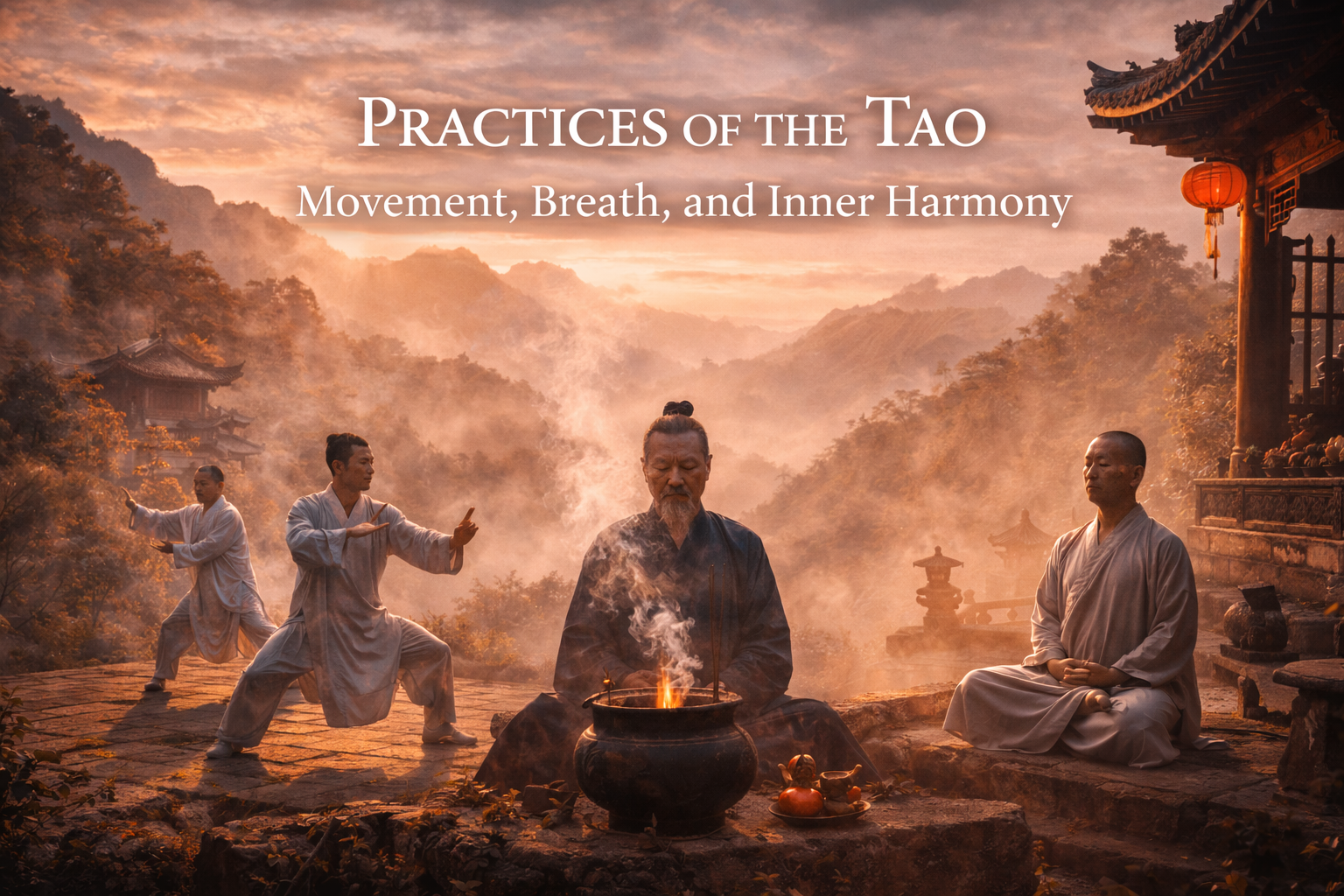
Our StoryPractices of the Tao
Cultivating Harmony Through Movement, Breath, and Stillness
For centuries, Taoist philosophy has inspired practices that cultivate balance between body, breath, and mind. These traditions developed in temples, mountain monasteries, and quiet natural landscapes where practitioners studied the rhythms of nature and the flow of life energy.
Rather than emphasizing force or control, Taoist practices focus on harmony and awareness. Through slow movement, mindful breathing, and meditation, practitioners learn to align themselves with the natural flow of the Tao.
These practices continue to be studied and practiced around the world, offering simple yet powerful ways to cultivate health, clarity, and inner balance.
Taoist Martial Arts
The Way of Movement
Many martial arts traditions were shaped by Taoist philosophy, particularly those associated with the Wudang Mountains, a historic center of Taoist practice. These internal martial arts focus on fluid movement, balance, and awareness rather than brute strength.
Practices such as Tai Chi emphasize slow, continuous motion that mirrors the natural flow of energy within the body. Movements shift smoothly from one posture to another, encouraging relaxation and coordination between breath and motion.
Rather than viewing martial arts solely as combat techniques, Taoist traditions often approach them as methods for cultivating vitality, discipline, and inner calm.
Taoist Breathing
Cultivating the Breath
Breathing practices play a central role in Taoist internal cultivation. Traditional breathing techniques encourage slow, deep breaths that help circulate qi, the life energy believed to flow through the body.
These practices often involve breathing through the nose, expanding the lower abdomen, and allowing the breath to settle naturally into a calm rhythm. When practiced regularly, Taoist breathing techniques are believed to support relaxation, focus, and physical vitality.
Breathing is often practiced alongside gentle movement or meditation, forming the foundation for many Taoist wellness disciplines.
Taoist Meditation
The Practice of Stillness
Meditation has long been an essential part of Taoist practice. Unlike methods that emphasize strict concentration, Taoist meditation often focuses on quiet observation and relaxed awareness.
Practitioners sit comfortably and allow thoughts to rise and pass without attachment. Attention is gently directed toward the breath, posture, or the surrounding environment.
Over time, this practice encourages a calm and balanced mind, helping individuals reconnect with the deeper flow of the Tao.
The Unity of Body, Breath, and Mind
Although these practices may appear different, they are closely connected. Martial arts develop the body, breathing practices cultivate energy, and meditation quiets the mind.
Together they form a path toward balance that reflects the central Taoist principle of harmony between the internal and external world.
Through movement, breath, and stillness, Taoist practices invite us to live with greater awareness, vitality, and connection to the natural rhythm of life.