
Sacred Mountains of Taoism
Pilgrimage and spiritual landscapes
For centuries, Taoist practitioners have journeyed to remote mountain landscapes believed to hold powerful spiritual energy. These sacred mountains are more than dramatic natural settings — they are places where philosophy, meditation, and ritual practice have developed in close relationship with the natural world.
Within Taoist tradition, mountains are seen as places where heaven and earth meet. Rising above forests and valleys, they represent a bridge between the human world and the greater forces of nature. Their quiet cliffs, winding paths, and ancient temples create an environment where reflection and spiritual cultivation can flourish.
Some of the most revered Taoist mountains include Mount Qingcheng, Mount Wudang, Mount Longhu, and Mount Laoshan. Over many centuries these landscapes became centers of pilgrimage where monks, scholars, and travelers sought wisdom, longevity, and harmony with the Tao.
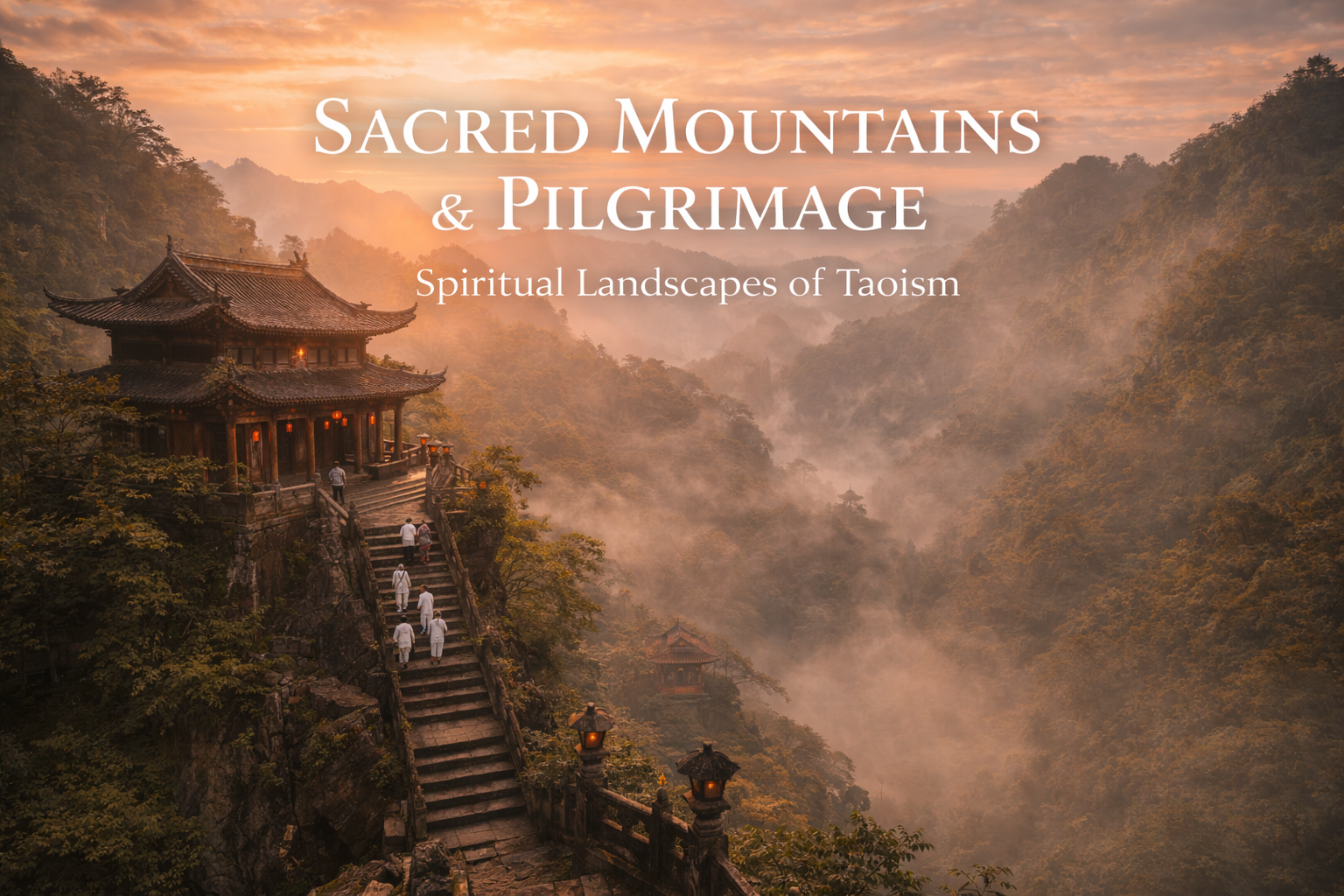
Stone stairways carved into mountain slopes lead visitors through dense forests and mist-covered ridges. Along these paths, travelers encounter meditation pavilions, mountain springs, and temples that have stood for generations. The journey itself is considered part of the practice — a gradual ascent that encourages patience, reflection, and awareness of the surrounding landscape.
Pilgrimage to these sacred mountains has long been both a physical and spiritual journey. Travelers step away from the rhythms of everyday life and enter environments shaped by silence, wind, and flowing water. In these spaces, Taoist philosophy becomes something that can be experienced rather than simply studied.
Even today, pilgrims and visitors continue to walk these ancient paths. Some come to pray at historic temples, others to practice meditation or martial arts, while many simply seek the calm atmosphere that has inspired Taoist thought for centuries.
The Living Landscape of Taoism
Sacred mountains remain an important part of Taoist culture and practice. Their temples, forests, and stone pathways preserve traditions that connect spirituality with the rhythms of nature.
To explore these landscapes and the temples that define them, visit our guide to:
Sacred Mountains & Temples →
https://www.myziran.com/sacred-mountains-temples
There you can discover the history, spiritual importance, and cultural traditions of some of the most important Taoist pilgrimage sites in the world.